Tuesday, December 13, 2016

A Year Long Thematic Social Studies Unit That Matters!

Despite the negative reports posted on the hour, despite the comments sections on most websites, despite the ever-growing notion that we are more divided now than we've ever been before...

We still have hope. 

We, LaNesha Tabb and Naomi O'Brien, have joined together to write what we like to call our "love letter" to students all over America- and even beyond. We seek to heal, enlighten, and promote curiosity about our world, it's past, and the present people in it.  This resource is for you. 


Our hope is that this resource widens perspectives, encourages conversation, and promotes the idea that different isn't "bad" or "weird." We believe this can be done at even the youngest ages. We realized that we were both guilty of only teaching Black History in our classrooms and that that wouldn't cut it when we live in a nation full of diverse people. In this resource, you'll find just about every heritage month that is recognized nationally. Our goal was to create a unit that has something for everyone inside. Why?

Because knowing stuff about our world matters. 

We have created a resource that covers Social Studies subjects for primary grades. In these monthly thematic units, we cover fresh and interesting topics in the areas of civics, history, sociology, geography, and economics. There's a little bit of everything in here- differentiated reading passages, activities, crafts, mini-books, e-books, assessments...the works! It can be adapted anywhere from grades K-3. LaNesha is currently teaching the modified version in kindergarten and Naomi teaches her gifted and talented students- all from the same resource!  


Here is a snapshot of the January Resource! 


Lastly, we wanted to make sure that you could see the big picture for where we are headed, so we'd love to present the overview for the year! Are you ready? Annnnnd scroll! 


See? We weren't kiddin'! Our goal was to recognize as many cultural groups and interesting topics as we could! We are so excited to expose our youngest students to our rich history, sociology, civics, geography, and economics! Little kids can do big things and think big thoughts and we hope this resource encourages just that! 


Friday, September 9, 2016

Phonological Awareness Warm-Ups: Building Strong Reading Foundations


These warm-ups have been a small group life saver! Focusing on Phonological Awareness and Sight Words for the first few minutes of small group has helped to accelerate and strengthen my students phonological awareness. I use one sheet a week. I print out 5 for each student in my small group and keep each sheet in a sheet protector. We review each skill quickly. If they struggle in a particular area, I make a note to spend more time on the area the next day, by reviewing the sheet AND giving more examples, modeling, and extra time to practice. I lead on Monday and Tuesday. Students partner up on Wednesday and Thursday. They review the skills individual Friday.
Isolating Sounds: Say the word. Use your fingers or counters to keep track of the sounds you hear. In no particular order, ask students about the beginning, middle, and last sounds they hear. Some days you might ask for the middle sound first. Don’t always ask for the sounds in the right order. 
Substituting Sounds: Say the word. Model how to identify the beginning sound. Model saying the new word after you’ve substituted the sound given on the sheet. Give students a chance to practice.
Adding Sounds: Say the initial consonant, pause and then give the vowel and constants that follow (onset and rime). Students should say the word they heard. 
Sight Words: I use Fry’s Sight Words in order, in groups of 10. Review all 10 words each day, all week long. Add the words to your Word Wall for students to use. For the star, allow students to choose a special word they want to learn that week. Write it on an index card, dry erase board, or the sheet protector. My groups usually all decide on the same word and learn it together!

 Blending Sounds: Tap each dot, and say each sound with the students. Start out slowly. Start to say each sound quickly and ask students if they can blend the sounds together to make a word.
Deleting Sounds: Practice taking off the beginning or ending sound of words. Teacher Prompt: “Say cup. Now say cup without the /c/.”
Ending Sounds: Say each word represented by the picture. Ask students to listen for the two words that have the same ending sound. Once they pick the words correctly, ask them to identify the sound. See if students can produce more words with the same sound at the end.
Middle Sounds: Say each word represented by the picture. Ask students to listen for the two words that have the same middle sound. Once they pick the words correctly, ask them to identify the sound. See if students can produce more words with the same sound in the middle.

Syllables: Teach students how to listen for the natural split in sounds that occur in words. For a spelling tip, tell students that there must be a vowel in each syllable. Practice clapping or tapping out syllables. Students can circle or place a counter on the correct number.
Deleting Sounds: Practice taking off the beginning or ending sound of words. Teacher Prompt: “Say cup. Now say cup without the /p/.” For blends students should break the blend apart. For example: Teacher Prompt: “Say globe. Now say globe without the /g/.” Students should respond: “lobe”.
Segmenting Sounds: Say each word. Then segment, or divide the word into the separate sounds it is made up of.Teacher Prompt: “Segment the word flag into the sounds that make up the word.” Students should respond: “/f/ /l/ /a/ /g/.” They should not respond with: “/fl/ /a/ /g/.” If they do, praise them for hearing the other sounds, and focus their attention on the beginning blend that should have been separated.

 Rhymes: Say each word. Remind students that rhymes don’t need to have the same spelling, but they do need to have the same word ending sounds. If students can not produce a rhyme yet, give them a word ask which word on their sheet rhymes with the word you said. If that is too difficult, give students two words that rhyme and discuss why they are rhymes. Give students two words that do not rhyme, and discuss why they are not rhymes.
Beginning Sounds: Say each word represented by the picture. Ask students to listen for the two words that have the same beginning sound. Once they pick the words correctly, ask them to identify the sound. See if students can produce more words with the same sound at the beginning.
Word Count: Tell students to close their eyes and listen to the  sentence you read. See if they can hear how many words are in the sentence. If students struggle with this, have them touch each word as you read it. Some students may skip to the next word when they hear different syllables in one word. Remind them to listen and concentrate on what is being said, not just the sounds.
Find Warm Ups here.

 Making the time to include these quick warm ups at each small group meeting improved my students reading skills so much. We were able to tie in these important skills when we moved on to guided reading. Students would actively look for sight words, find rhymes they could manipulate by adding or deleting sends, and segment and blend words while they were reading! I highly recommend using these skills whole group and at small group for quick reading warm ups!
A lot of these phonological warm ups matched up nicely with our daily reading goal.
Find reading goals here.

Hope these ideas are helpful for your little readers!
Have fun teaching!
 XOXO
Mrs. O'Brien


Saturday, August 27, 2016

#ReadLikeARockStarChallenge

Hello fellow Teachers and Friends....I can NOT express how excited I am to be kicking off the 2016-2017 school year. This first week has been amazing and I want to celebrate with ALL of you! Join me in my first Instagram Hashtag Challenge to win big! I want to see pictures of your favorite classroom corner-- You know, the one that gives you the most inspiration. Is it your reading center, like mine? Do you have a Math Lab or Science Lab area? Show me what you've got and be sure to tag it with #readlikearockstarchallenge so I can find it. I encourage all teachers to have fun with this, including HomeSchool parents. On September 1st I'll pick a random winner to receive $25 in FREE resources from my TpT store! Be sure to pass on the information to your fellow teachers and mentors.


Wednesday, August 17, 2016

5 Days!

Here in Denver there are only...5 days left until the first day of school. I. Am. Excited! I can not wait for that back to school buzz and working closely with my students. Truthfully, maybe I'm slightly nervous too. This is my first year back since having my son and I have taken on new responsibilities at school this year. A lot of change, a lot of opportunity and a lot of fun is expected this year.

The "Back to School Buzz" is always something to be excited about,  but when it begins to dwindle down some teachers and students alike, become a little nervous. I like to begin my year with easy peasy assessments and activities to assist me in gaging what level my students work best at.


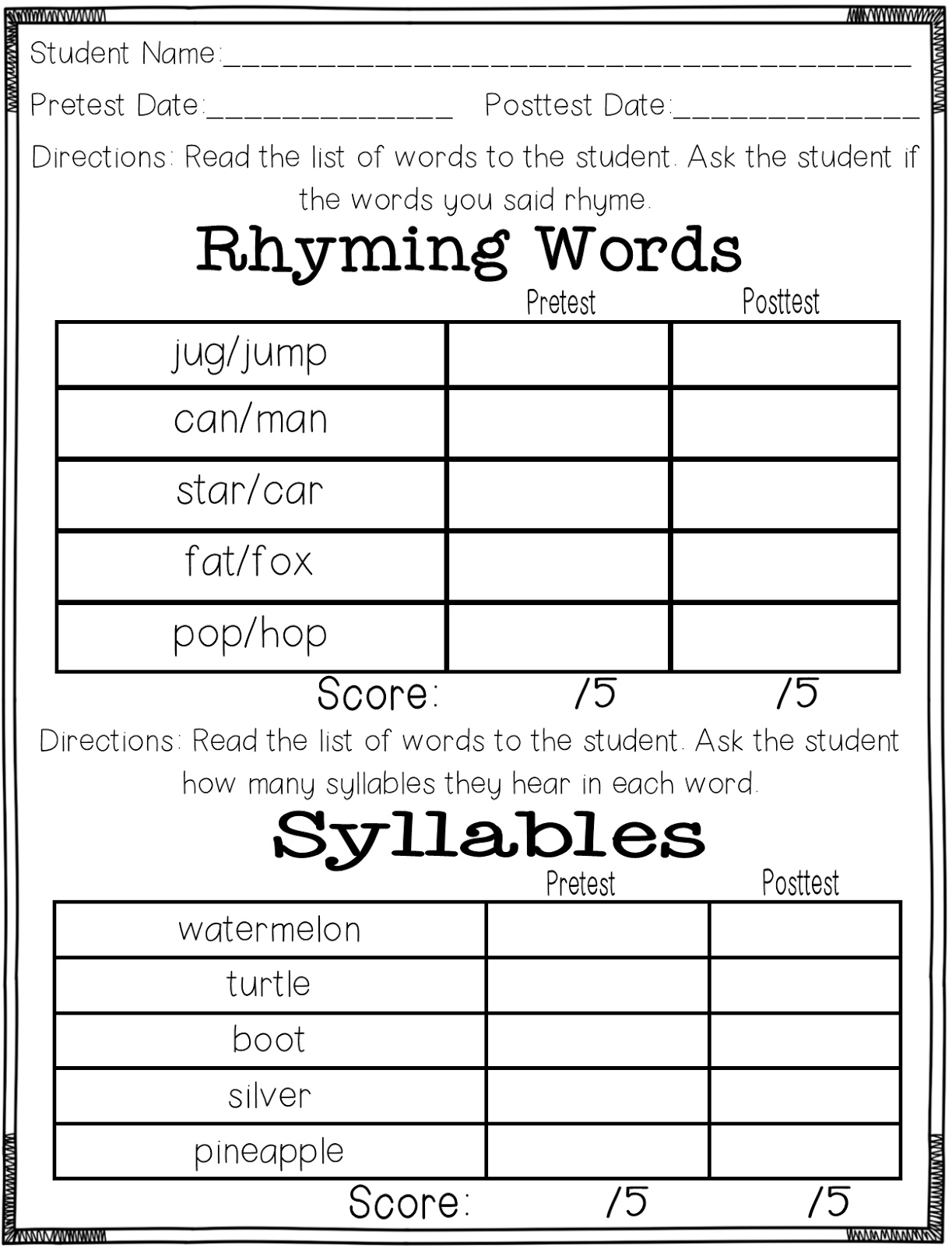
These are two examples of sheets from a packet that I use for my kids during the first weeks of school. By separating concepts such as rhyming, beginning sounds, end sounds and middle sounds, I can tell where they are the strongest and weakest in Phonics and Reading. This is a great tool to use throughout the year as well so you can see their progression. If you would like to see more of this resource you can do so by clicking here.

Please stayed tuned and in the next several days I will be letting you know how to pick up a few of my Teachers pay Teachers resources-- For FREE!

XoXo- Naomi


Wednesday, August 10, 2016

Who are your students?

The countdown begins..... We are entering the last several days before the classrooms and hallways are filled with the "Back to School" buzz.

Have you received your roll call roster yet? I love receiving the names of my students so I can begin writing on the sweet placement cards I find or make and just getting everything together in general.

One important detail I want to speak about is the importance of knowing more then just their names. Who are these kids? Do they have siblings? Do they live with Mom and Dad or a blended family? Do they love Macaroni and Cheese and the color purple? All of these little details will play a pivotal role in your interaction throughout the year. When you know little details about your students it will connect you on a larger level and build a trust between you. This will lead to better communication with you and your students.

I have an adorable writing exercise built to practice writing skills and open the lines of communication.


This resource will be fun to use to get to know your students and help them share a little bit about themselves! Pick the child that looks the most like the student completing it and allow them to fill in the blanks and color the child to look just like them. There are multiple children and writing sheets to  choose from. The kid's will love this writing exercise. These are perfect for displaying during the first weeks of school, at open house, or whenever you’d like! Have fun! 

You can find this resource at my Teachers pay Teachers store by clicking here.


Sunday, August 7, 2016

First Week of School: Quick Tips and Tricks for new K-2 Teachers


The first week of school can  seem intimidating for a new teacher, but we've all been there. In fact, most veteran teachers are still a bit nervous before the first day of school each year.
After taking a year off after having my baby, I am returning to school, and I too am feeling a little bit nervous. I've taught 2 years in kindergarten, 2 years in first grade, and 2 years in second grade, so I thought I'd think back to the tips I received and learned along the way. 

Hopefully some of these tips are helpful to you!

 
You need an attention getter! Maybe it will be a fun chant, a series of claps, or a flicker of the lights. Whatever it is, make sure you practice it all week long. I like to use a wireless doorbell. They are about $15 at Wal-Mart. I even let my kids roam around them room making some noise to practice what to do when they hear our doorbell chime. They know to instantly freeze and look to me for their next directions.


 This is a good one to go over early, as your K-2 students will be running to the bathroom every 10-15 minutes. I buy a wooden "B" and "G"  each year and explain to my students that only one boy and girl may go to the bathroom at a time. They must put the letter on their desk before heading to the bathroom. This lets me scan the room and instantly see who is in the bathroom.
Students must raise their hands with their fingers crossed when sitting at the carpet to let me know they have to go, and I will simply nod or shake my head no.
If they are not at the carpet (for whole group lessons), they know they can go freely as long as the right letter is available.
 From Day 1, start working on building a positive classroom environment! You can do this by setting high expectations for everyone and not excusing behavior because it is the first day. Model what you'd like to see and reward what you'd like to see. Praise the good choices you see all week long (and all year long). Address negative behavior and poor choices immediately! Involve the students in showing good and BAD examples of behaviors. Discuss your rewards system and consequences for poor choices. I created a fantastic resource that helps teachers build positive classroom communities. You can read about my ideas here.

 Building relationships with parents and caretakers is key to having a great year. Get to know them all! Make phone calls, send home POSITIVE notes about their child, and make time to talk to them when you see them. Yes, the first week is a super busy week for us teachers, but you will not regret making time to interact and build meaningful relationships with your students' parents. When you have a great relationship with your students' parents, and they know you truly care about their child, they will be more receptive to academic or behavioral conversations about their child in the future that may not be so positive.


If you don't plan to goof off, take extra recesses, and watch movies all year long, you definitely should not set this precedent on Day 1! I do not do hardcore teaching the first week, but I definitely get to work. I start reading and math centers, and start to find out where my students are academically. We review routines and procedures, write stories, read books, get to know each other, play games, and have fun, but I still follow a schedule, break up into groups, and conduct whole group lessons to set up for the following week when we get down to business!

 Get to know your kids! Plan for getting to know you activities for whole group and small group settings with your students. Through writing, reading, and discussion, you can learn a lot about each student during the first week of school. I have a great free All About Me resource here. Don't forget to share about yourself, too! Students love to know who they are learning from.
I also like to send home a questionnaire inviting parent to share some information about their child with me. I ask about their strengths and weaknesses, what motivates them to learn, and what their goals are for their child.

 All About Me Sheets here.
 All About Me Sheets here.
All About Me Sheets here.

 Whether your students go to lunch/recess with or without you make sure to discuss appropriate recess and lunchroom behavior them. We practice lining up, we talk about making friends and including friends, how to be respectful of the school's property and other staff members, and  being role-models. Something I stress to my students all year long, is that they should be their best self even if I'm not there to see it. They should strive to be better because THEY want to be better, not because I told them to.
I also set up a tally system on the board. If they get complimented as class by other adults we get a tally (two if it's the principal), when we get 20 tallies, they all get a sticker or a Skittle.

 Sorting supplies after school and before school each day used to make me so sad. It was time consuming, I was tired, and I had a million other things I could be doing!
I put an end to the madness by setting up boxes and bins that I labeled. I have free labels as seen in the picture above for use here. As my students brought supplies in they sorted them immediately, and that was that.
Going along with being a family-like community, I pool all of our supplies together and we all share them all year. It's worked out perfectly for 6 years, and I wouldn't do it any other way! 
 You've got to plan. And I mean p.l.a.n. Make sure you know what you're doing, about how long it will last, what you're doing after, what you're doing in between, and what you're going to do if something goes wrong! Our days don't always go perfectly, and with a new batch of students (unless you looped), you may not know how quickly or slowly what you planned may go. Make sure to keep your day on track, and minimize problems during transitions by knowing exactly what you're going to do.

My last tip is don't forget to be awesome. If you're freaking out and showing how frazzled you are, your students will pick up on that. Go with flow, laugh at yourself, have fun, and be AWESOME!

I hope some of these tips were helpful to you! Have a great first week back at school. You're going to be AMAZING!


Friday, August 5, 2016

Behavior Management

The summer is quickly coming to a close and school will be back in session soon. I do not know about you but I certainly feel it went by quickly, too quickly! The adjustment from long play days and sleeping in can be tough on everyone, especially the students. One of the most important systems to have in place, starting the first day of school is a Behavior Management System. Consistency is Key and if you have a plan in place from the start it will make the transition back to class easier.

I am excited to share a new resource with you I have started on YouTube. I am beginning a Quick Teacher Tips, Tricks and Ideas series where I share with you my idea's and what helps me be the best teacher I can be. Hopefully these tips will sound like an idea you can implement into your classroom and help with those one or two students that are off task or struggling with their behavior. Ideally you will have your plan in place and these tips and tricks can be used as a reinforcement, if you need it. You can click here to watch this first video about my behavior management system and the materials I use as reinforcement.

If you would like your own copy of any of the materials I use in the video they can be found at my Teachers pay Teachers store, Read Like A Rock Star

If you have any helpful ideas, tips or questions please leave me a comment in the comment section of the YouTube video! I hope to have given you several good ideas and Good Luck on your first day back!


Enjoy my tips!

xoxo,
Mrs. O'Brien